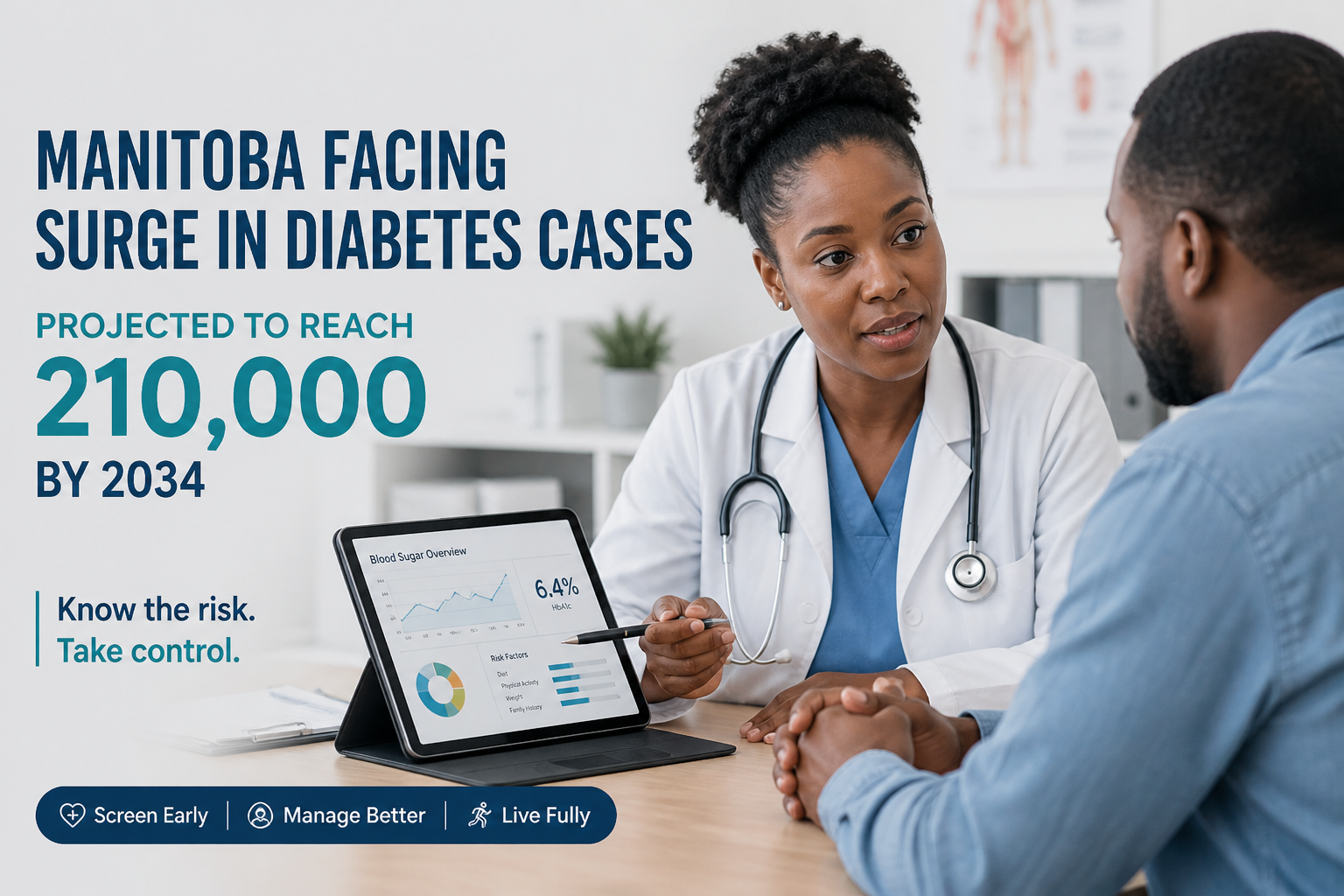

Manitoba Facing Surge in Diabetes Cases, Projected to Reach 210,000 by 2034
Diabetes is one of the most significant and rapidly growing health challenges facing Manitoba. According to the Manitoba Government’s 2025 Health Status of Manitobans Report, over 152,000 Manitobans were living with diagnosed type 1 or type 2 diabetes in 2024. That number is projected to rise to over 210,000 by 2034, representing a 38% increase in just one decade.
These numbers reflect a broader national trend, but Manitoba consistently ranks above the Canadian average for chronic disease burden. Understanding your personal risk and acting early is one of the most powerful things you can do to protect your long-term health.
What is Diabetes and Why Does It Matter?
Diabetes is a chronic condition in which the body either cannot produce enough insulin (type 1) or cannot use insulin effectively (type 2). Insulin is the hormone responsible for helping glucose from food enter your cells for energy. When this process is disrupted, blood sugar levels rise and, over time, damage blood vessels and nerves throughout the body.
Unmanaged diabetes can lead to serious complications including heart disease, stroke, kidney failure, vision loss, and lower limb amputation. Manitoba has the highest rate of end-stage kidney disease from diabetes in Canada, at 36.1% of cases compared to the national average of 28.7%. Source: Shared Health Strategic Plan 2025-2030
Who is Most at Risk in Manitoba?
Several factors increase the risk of developing type 2 diabetes, and many of them are highly prevalent in Manitoba: Approximately 22.2% of Manitobans self-identify as being of African, Arab, Asian, Hispanic, or South Asian descent, populations that face a statistically higher risk of type 2 diabetes.
Manitoba is home to 237,190 Indigenous people, who face significantly higher rates of diabetes due to a combination of genetic, socioeconomic, and systemic health factors.
47.2% of Manitoba adults are physically inactive, a major modifiable risk factor for type 2 diabetes.
33.8% of Manitoba adults are living with overweight and 33.7% with obesity, both of which significantly elevate diabetes risk.
Importantly, type 2 diabetes often develops slowly and silently over years. Many people are living with prediabetes or undiagnosed diabetes without knowing it.
Recognizing the Warning Signs
The symptoms of type 2 diabetes can be subtle. Common signs include:
- Increased thirst and frequent urination
- Unexplained fatigue or low energy
- Blurred vision
- Slow-healing wounds or frequent infections
- Tingling or numbness in the hands or feet
- Unexplained weight changes
If you are experiencing any of these symptoms, or if you have risk factors for diabetes, speaking with your family doctor is an important first step.
How is Diabetes Diagnosed and Managed?
Diabetes is diagnosed through blood tests, including fasting blood glucose, an A1C test (which measures average blood sugar over approximately three months), or an oral glucose tolerance test. Your family physician can order these tests and interpret the results in the context of your full health picture.
Management of type 2 diabetes typically involves:
- Dietary changes, particularly reducing refined carbohydrates and sugar
- Regular physical activity, aiming for at least 150 minutes per week
- Blood sugar monitoring and regular medical check-ins
- Medications, including oral agents or insulin as needed
- Management of related conditions such as blood pressure and cholesterol
The Manitoba government has also expanded access to continuous glucose monitors and insulin pumps in recent years, making diabetes management more accessible across the province.
Prediabetes, the stage before a type 2 diabetes diagnosis, is reversible with lifestyle intervention. Research consistently shows that modest weight loss of five to seven percent of body weight, combined with increased physical activity, can reduce the risk of progressing to type 2 diabetes by over 50%. Early screening is key. If you have a family history of diabetes, carry weight around your midsection, or belong to a higher-risk population, discuss blood sugar screening with your physician.
At West St. Paul Medical Clinic, our team provides diabetes screening, diagnosis, ongoing management, and preventive counselling. Whether you are concerned about your risk or already managing a diagnosis, your family doctor is your partner in long-term health.